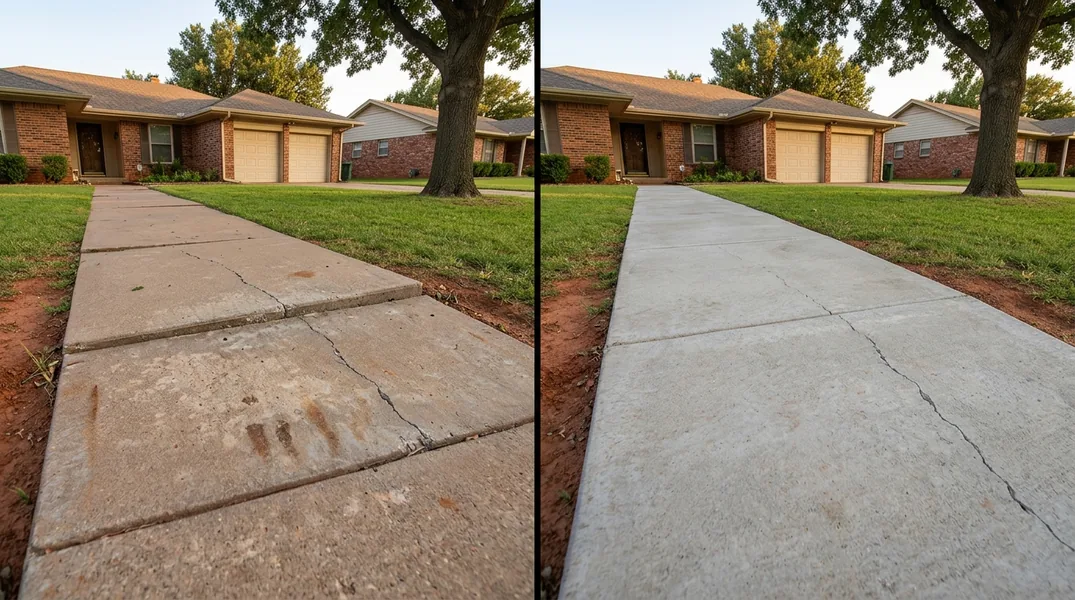
Understanding Norman's Unique Soil Challenge
If you own a home or business in Norman, you've likely noticed something that catches many newcomers off guard: the ground beneath your feet is noticeably different from other parts of the country. The red clay that dominates the Oklahoma landscape isn't just a cosmetic feature. It's a serious structural challenge that affects everything built on top of it, especially concrete. This clay contains minerals that absorb and release water dramatically, causing the soil to expand when wet and shrink when dry. That constant movement puts tremendous stress on concrete slabs, leading to cracks, heaving, and settling that can compromise driveways, patios, and foundations.
The problem is particularly acute in Norman because of our regional climate patterns. Oklahoma experiences significant seasonal moisture variations, with wet springs followed by dry summers and falls. This cycle of expansion and contraction happens repeatedly year after year, and concrete bears the brunt of it. Unlike soil that can compress and shift gradually, concrete is rigid. It cracks under pressure, and once damage begins, it accelerates. Understanding this geological reality is the first step toward protecting your investment and knowing when to call in professionals for Concrete Repair & Resurfacing.
What Is Expansive Clay and Why Does It Damage Concrete?
Expansive clay, also called shrink-swell soil, is composed of clay minerals that have an unusual relationship with water. When these minerals absorb moisture, they swell significantly. When they dry out, they shrink back down. This isn't a gradual, uniform process. Different layers of soil dry and absorb water at different rates, creating uneven pressure that pushes upward on concrete slabs from below. A driveway that was perfectly level in the spring might have a noticeable hump or depression by late summer. Over several years, this repeated stress causes the concrete to crack, often in a pattern that looks like a spider web or broken eggshell.
The mineral composition of red clay in Oklahoma includes montmorillonite and illite, both known for high water absorption capacity. When a heavy rain soaks into the soil around your driveway, these minerals can swell by 10 to 15 percent or more. Imagine the force generated by soil expanding that much directly beneath a concrete slab. The concrete has nowhere to go, so it buckles, cracks, or develops pop-ups where pieces of the surface literally lift away. Conversely, during dry spells, the same soil shrinks, creating voids beneath the slab. The concrete then settles unevenly, breaking apart under its own weight. This is why Concrete Driveways in Norman require special attention to design and installation.
Common Signs of Red Clay Concrete Damage in Norman
Homeowners often don't realize their concrete problems are soil-related until damage becomes visible and serious. The early warning signs are subtle but worth watching for. If you notice fine cracks appearing in your driveway or patio that seem to grow larger each season, expansive clay is likely the culprit. These cracks often form in patterns and can be accompanied by uneven surfaces where one section of concrete sits higher or lower than adjacent sections. You might also notice that cracks reappear in the same locations even after they've been sealed or patched, which is a telltale sign that the underlying soil movement hasn't stopped.
Another common indicator is the appearance of raised areas or heaving on your driveway or patio surface. This happens when soil beneath the concrete expands with moisture, literally pushing the slab upward. You might trip on the raised edge, or water might pool in low spots where settling has occurred. If your garage floor shows cracks or if doors and windows in your home are sticking or won't close properly, your foundation may be experiencing the same soil movement. These signs suggest it's time to get a professional assessment. Norman Concrete can evaluate your property and recommend whether Concrete Repair & Resurfacing or preventive measures are needed. Call (405) 857-0987 for a consultation.
Protective Strategies: How to Build Concrete That Lasts in Norman
The best defense against red clay damage is proper installation from the start. Professional concrete contractors in Norman understand that standard installation methods used in other regions simply don't work here. The soil preparation is critical. Before pouring concrete, the ground must be properly graded to ensure water drains away from the slab rather than pooling beneath it. A moisture barrier, typically plastic sheeting, should be installed to reduce water absorption into the soil directly under the concrete. Additionally, a properly compacted base layer of gravel or crushed stone helps distribute weight more evenly and allows for better drainage.
The concrete mix itself also matters. In areas with expansive clay, contractors should use concrete with lower water content and higher cement ratios to create a denser, more durable product. Proper thickness is another factor. A thicker slab is more resistant to cracking from soil movement, though it's more expensive upfront. Reinforcement with rebar or wire mesh helps concrete resist tensile stress from heaving and settling. Finally, control joints cut into the concrete at regular intervals allow for planned cracking rather than random fractures. These joints give the concrete a place to crack without compromising the structural integrity of the whole slab. When you're planning a new driveway or patio, discussing these protective measures with your contractor can add years to the lifespan of your concrete.
When to Call Professionals: Concrete Repair Near Me
Not all concrete damage requires complete replacement. If you catch the problem early, Concrete Repair & Resurfacing can extend the life of your driveway or patio significantly. Hairline cracks that are less than one-eighth inch wide can often be sealed with specialized concrete sealants that prevent water from entering the crack and expanding the damage. Larger cracks, or cracks that are actively widening, may need to be routed out and filled with flexible polyurethane or epoxy products that move with the concrete as soil shifts. For more severe damage involving heaving, settlement, or multiple large cracks, resurfacing might be the best option. This involves applying a new layer of concrete over the damaged slab, restoring a level, usable surface.
The challenge with DIY repairs in Norman is that they often fail because they don't address the underlying soil movement. A crack you fill today may reopen next spring when the soil expands again. This is why working with experienced professionals who understand local soil conditions is so important. Norman Concrete has worked with countless homeowners dealing with expansive clay damage. We can assess whether your situation calls for repair, resurfacing, or preventive measures for future projects. If you're seeing signs of damage or want to discuss options for a new project, reach out to us at (405) 857-0987 or visit our website to request a free estimate.
Protecting Your Investment: Long-Term Maintenance Tips
Once you've had concrete installed or repaired, protecting it from further damage requires ongoing attention. Water management is your most powerful tool. Keep gutters and downspouts clear so that rainwater flows away from the foundation and driveways rather than pooling around them. Grade your landscape so water naturally slopes away from structures. During heavy rains, pay attention to where water collects, and consider adding drainage solutions like French drains if necessary. In dry seasons, monitor your landscaping to ensure that large trees or shrubs aren't drawing all the moisture from the soil immediately adjacent to your concrete, which can cause localized shrinking and cracking.
Regular sealing of concrete surfaces also helps. A quality concrete sealer creates a water-resistant barrier that slows moisture absorption into the slab itself, reducing the rate at which the soil beneath it expands and contracts. Sealing every two to three years is a good practice in Norman's climate. Finally, avoid heavy salt use during winter months. Salt accelerates concrete deterioration and worsens the damage caused by freeze-thaw cycles combined with soil movement. If you're unsure about the best maintenance approach for your specific situation, Norman Concrete can provide guidance. We understand Norman's unique challenges and can help you develop a long-term strategy to protect your concrete investment for decades to come.
Looking for a professional concrete contractor in Norman? Norman Concrete responds fast for all your concrete needs.
Get a Free QuoteOur services: Concrete Driveways · Concrete Patios · Stamped & Decorative Concrete