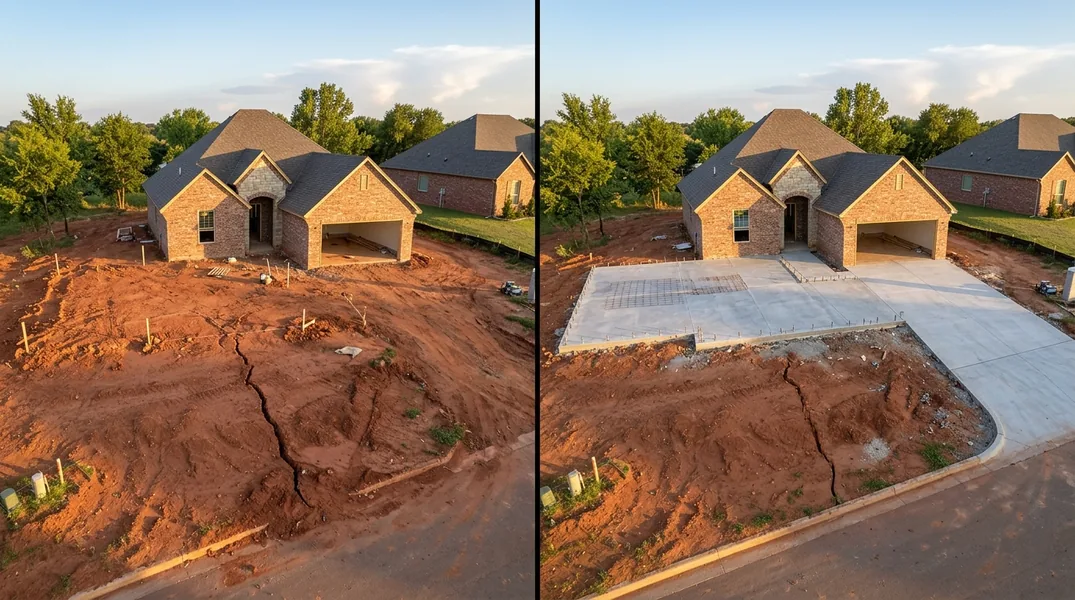
Understanding New Construction Concrete Slabs in Norman
Buying a new home in Norman is exciting, but the foundation literally supports everything that comes after. A concrete slab is the most common foundation type for residential construction across Oklahoma, and it's critical to understand what you're getting before you close on your new build. Unlike older pier-and-beam foundations or basements, a concrete slab sits directly on the ground, providing a stable base for your entire home. However, this direct contact with soil means that ground conditions, installation quality, and long-term maintenance all play significant roles in how well your foundation performs over decades.
The concrete slab in your new Norman home is typically four to six inches thick and reinforced with steel rebar or wire mesh to prevent cracking and shifting. Builders pour these slabs after grading and preparing the subgrade, a process that requires precision and proper drainage planning. If the soil beneath isn't properly compacted or if water management isn't addressed during construction, you could face settling, cracking, or moisture issues years down the road. This is why understanding what happens during the pour and inspection phases is so important for protecting your investment.
What to Look for During a Builder Foundation Inspection
A professional builder foundation inspection before closing is one of the smartest investments you can make as a new homebuyer. This inspection should happen after the concrete has fully cured, typically 28 days after the pour, but before you sign the final paperwork. A qualified inspector will examine the slab for visible cracks, settlement patterns, proper slope for drainage, and signs of water intrusion. They'll also check that the foundation meets local building codes and that the concrete was mixed and finished according to industry standards. In Norman, where seasonal weather changes and clay-heavy soils are common, foundation issues can develop if corners were cut during construction.
During your inspection, pay attention to hairline cracks versus structural cracks. Hairline cracks are often normal as concrete cures and shrinks slightly, but wider cracks or those that run diagonally across the slab may indicate settling or subgrade problems. Check the perimeter for proper slope away from the foundation, which is essential for water management. Look at areas where utilities enter the home and inspect the garage slab separately, as this high-traffic area experiences different stress than interior slabs. If you notice anything concerning, don't hesitate to ask your builder for clarification or request that a licensed structural engineer evaluate the foundation. This is not the time to be shy about asking questions or requesting repairs before closing.
Decoding Your New Home Foundation Warranty
Every new home comes with a new home foundation warranty, but these warranties vary significantly in what they actually cover and for how long. Most builder warranties last between one and ten years, with the first year typically offering the most comprehensive coverage. During year one, most builders will repair or address settling, cracking, or water intrusion issues at no cost to you. However, after that initial period, coverage often becomes limited to structural defects, and you may be responsible for cosmetic cracks or minor settlement-related repairs. Understanding these terms before you close is essential because you won't want surprises later.
Read your warranty documentation carefully and ask your builder to explain what is and isn't covered. Some warranties exclude damage caused by soil movement, expansive clay, or poor drainage, which are common issues in Oklahoma. Others may only cover defects that meet specific size thresholds. Ask whether the warranty is transferable if you sell the home, as this can affect your property's resale value. Additionally, inquire about the builder's process for warranty claims. Do they respond quickly? Will they make repairs, or will they offer a credit? Understanding these details helps you know when to contact the builder versus when you might need to hire a professional like Norman Concrete for Concrete Repair & Resurfacing services down the road.
Common Foundation Issues in Norman New Construction
Norman's climate and soil composition create specific challenges for new concrete slabs. The region experiences freeze-thaw cycles in winter, where moisture in and around the concrete expands when frozen, potentially causing cracking and surface deterioration. Additionally, much of the soil in the Norman area contains clay, which expands when wet and shrinks when dry. This movement can cause the foundation to settle unevenly, leading to cracks in the slab or even structural issues if the problem is severe. Builders who understand these regional challenges will take extra precautions, such as proper subgrade preparation, adequate drainage systems, and air-entrained concrete mix that resists freeze-thaw damage.
Another common issue is inadequate drainage around the foundation perimeter. If water pools against the slab or doesn't slope away properly, it can seep underneath and destabilize the soil, causing settlement. This is particularly problematic in Norman, where heavy spring rains are typical. Before closing, verify that gutters, downspouts, and grading are all designed to direct water away from the foundation. If you notice standing water near your new home after heavy rain, bring this to your builder's attention immediately. Long-term, proper drainage maintenance and occasional inspection can prevent expensive problems from developing. If you do encounter cracking or surface issues after closing, Norman Concrete can help evaluate whether repairs are needed and provide expert solutions.
Post-Closing Foundation Maintenance and Monitoring
Your responsibility for the foundation doesn't end at closing. Even the best-built slab needs ongoing attention to perform well over the decades. In the first year after you move in, monitor the foundation monthly for new cracks or signs of settling. Take photographs of any cracks you notice and note the date and weather conditions. This documentation is valuable if you need to file a warranty claim. Keep gutters clean and ensure downspouts direct water at least four to six feet away from the foundation. During heavy rain, check that water isn't pooling around the perimeter or entering the crawlspace or basement if your home has one.
Avoid making major landscaping changes near the foundation, such as planting large trees or installing irrigation systems that could alter soil moisture levels. If you're considering adding outdoor features like a new patio or driveway, work with experienced professionals who understand foundation protection. Norman Concrete has the expertise to install new Concrete Driveways and Concrete Patios while respecting your home's existing foundation and drainage patterns. If you notice significant cracks, settlement, or water issues after the warranty period expires, get a professional evaluation. Early intervention is far less expensive than waiting until problems become structural. For a free estimate on foundation-related concrete work or to discuss concerns about your slab, contact Norman Concrete at (405) 857-0987.
When to Call a Professional for New Construction Concrete Issues
If you've noticed problems with your new construction slab or you're concerned about the quality of the work before closing, it's time to bring in a professional. A licensed structural engineer or experienced concrete contractor can provide an objective assessment and identify issues that an untrained eye might miss. They can also help you understand whether problems are cosmetic or structural, which determines whether they're warranty-covered and how urgently they need addressing. Norman Concrete has years of experience working with homeowners in the area who want to understand their foundations and address problems early.
Don't wait until small issues become big problems. If you're seeing cracks wider than one-eighth inch, noticing doors or windows that stick, or experiencing moisture in your basement or crawlspace, these are signs that your foundation needs professional attention. Contact Norman Concrete today at (405) 857-0987 or visit https://norman-concrete.com to discuss your concerns and get expert guidance. Whether you need an evaluation, repairs, or simply peace of mind that your new home's foundation is solid, we're here to help you protect one of your largest investments.
Looking for a professional concrete contractor in Norman? Norman Concrete responds fast for all your concrete needs.
Get a Free QuoteOur services: Concrete Driveways · Concrete Patios · Stamped & Decorative Concrete